We have received a message from Hayate Kato, a first-year master’s student in the Graduate School of Engineering at Kitami Institute of Technology, who is participating in the ArCS III Young Researcher Overseas Dispatch Program.
Mr. Kato is currently sailing through the Arctic Ocean aboard the Canadian Coast Guard icebreaker CCGS Louis S. St-Laurent as part of the JOIS ocean observation program. To improve the accuracy of climate change research and enhance the safety of navigation in ice-covered waters, he aims to establish observation techniques that use drones equipped with LiDAR (Light Detection and Ranging) technology to rapidly and accurately assess surrounding sea ice conditions.
Message from Hayato Kato:
Arctic Observations During the JOIS Cruise
I am participating in the JOIS cruise, which is being conducted from September 17 to October 22, to observe sea ice in the Arctic Ocean.
During the cruise, we are collecting sea ice data using a range of observation methods. These include visual observations of sea ice; measurements of vertical water temperature and salinity profiles using XCTD (Expendable Conductivity, Temperature, and Depth) probes; continuous sea ice measurements using an electromagnetic (EM) ice thickness sensor; measurements of sea ice morphology using ship-mounted LiDAR; and observations using a microwave radiometer.
One of the key activities during this cruise is sea ice observation from above the ice using a drone.
Specifically, we conducted UAV-LiDAR observations by equipping a DJI drone with a LiDAR sensor manufactured by another company and using a custom application developed based on the official DJI SDK.
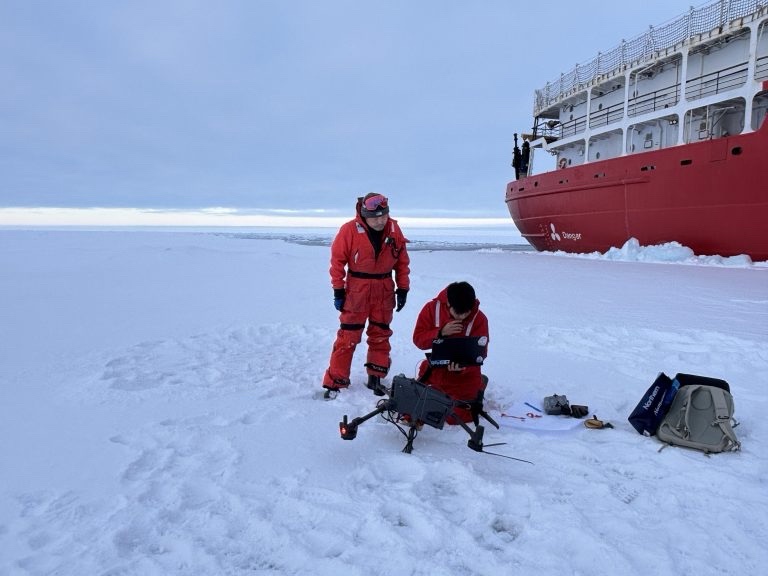
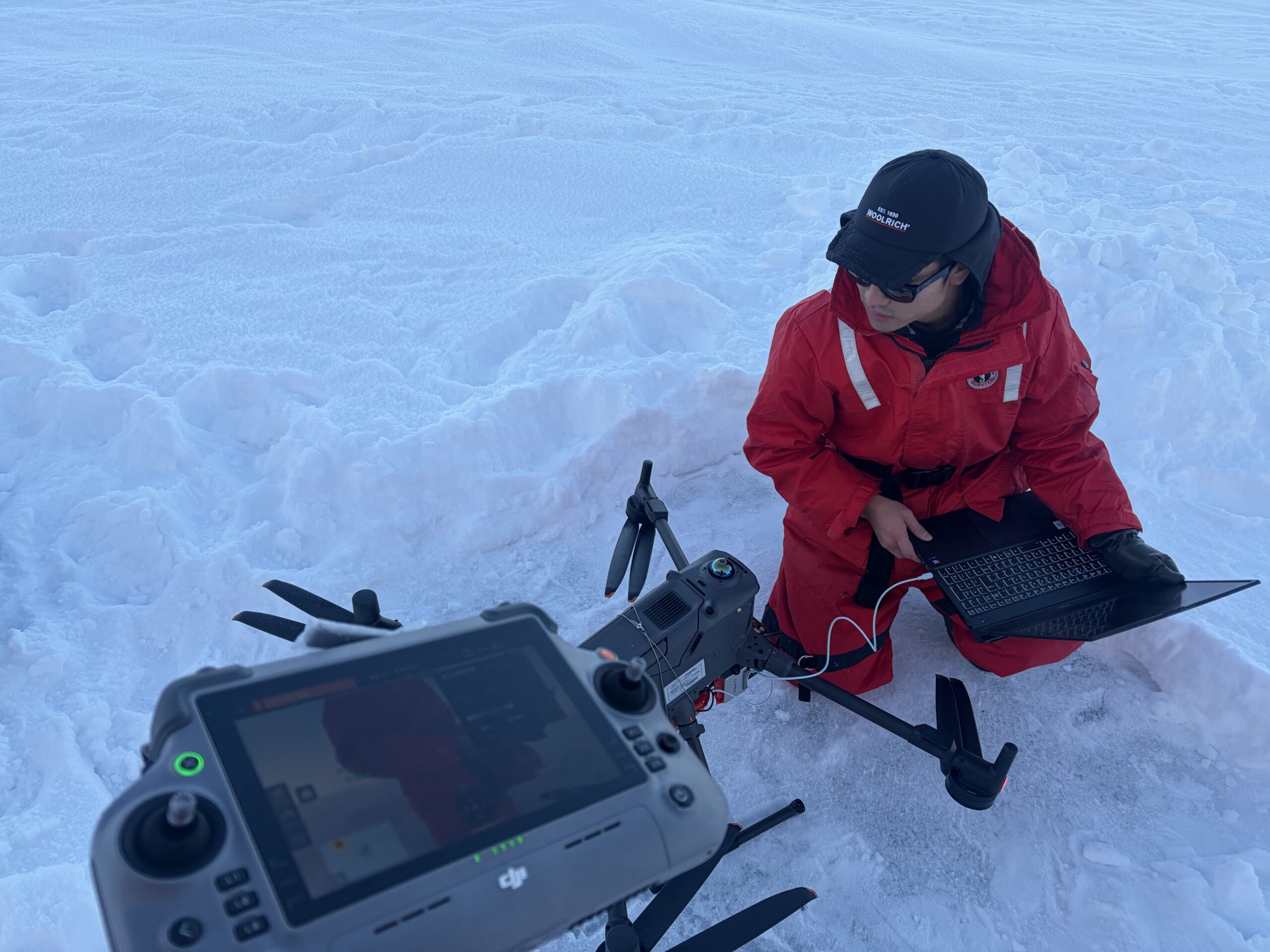
This work aims to establish a technology for monitoring surrounding sea ice conditions in real time using drones and LiDAR, with a view toward the future operation of the Mirai II in ice-covered waters. These observations represent an important first step toward achieving that goal.
The three days of on-ice observations involved working in challenging environmental conditions. We repeatedly traveled between the ship and the ice using a gangway while analyzing the collected data and refining our observation algorithms. The process involved continuous testing and troubleshooting.
Although we encountered various challenges in the field, the cooperation of the ship’s crew and many others enabled us to obtain valuable observation data that will contribute to future research. The on-ice observations were also highly valuable in allowing us to identify technical challenges and areas for improvement in the actual Arctic environment.
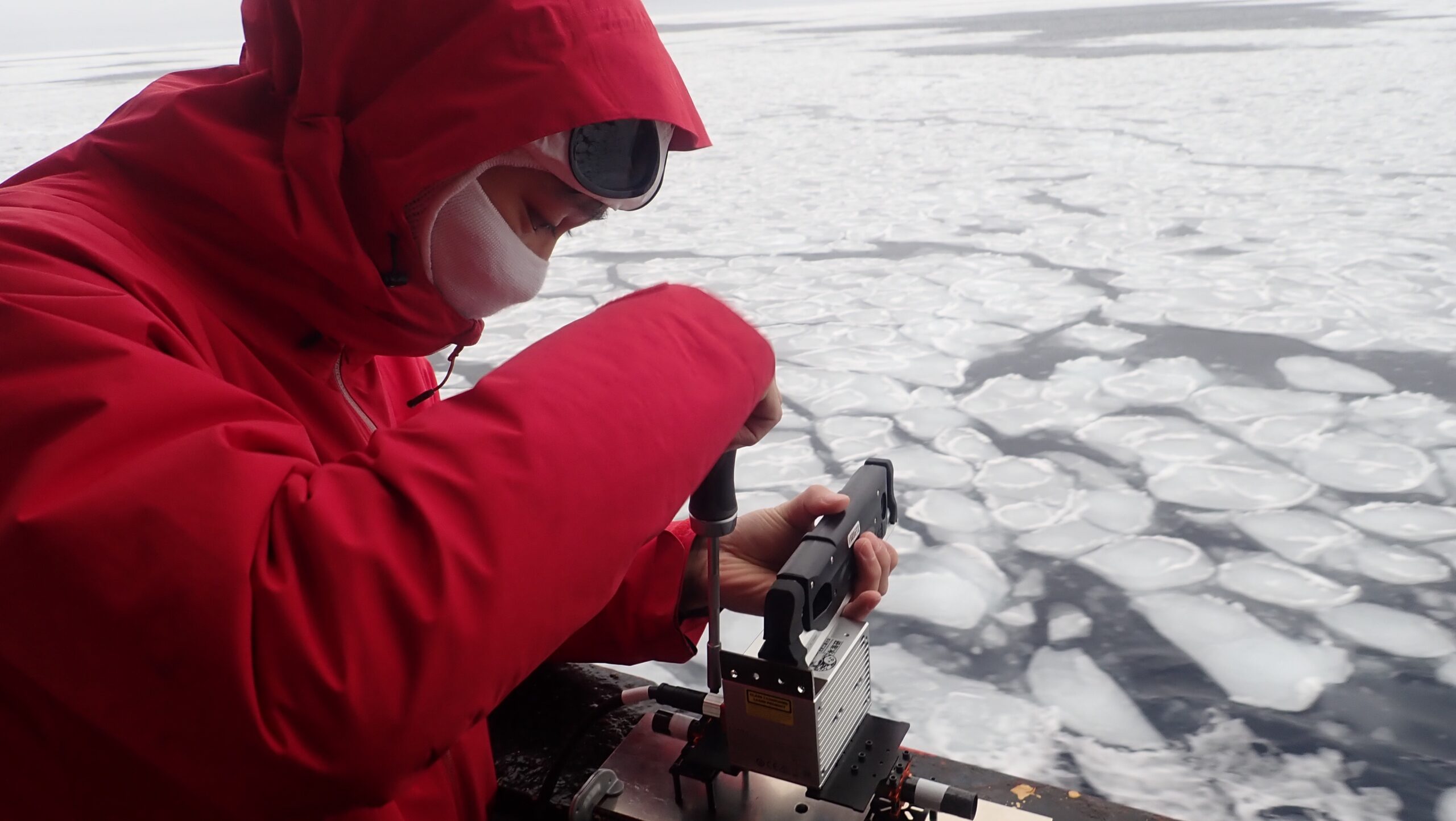
The vessel has now passed its northernmost point and is continuing southward while carrying out shipboard observations. We have also made improvements to the ship-mounted LiDAR system. For the remainder of the cruise, I intend to continue observations actively, using the improved system to obtain higher-quality data.
At Hokkaido University, the ArCS III Arctic Challenge for Sustainability III project operates the Young Researcher Overseas Dispatch and Hosting Program. The program aims to support the development of young researchers’ future research and professional activities related to the Arctic, as well as the establishment of international professional networks.
For more information, please visit the program website.