Arctic and Antarctic Science Curriculum
The Curriculum
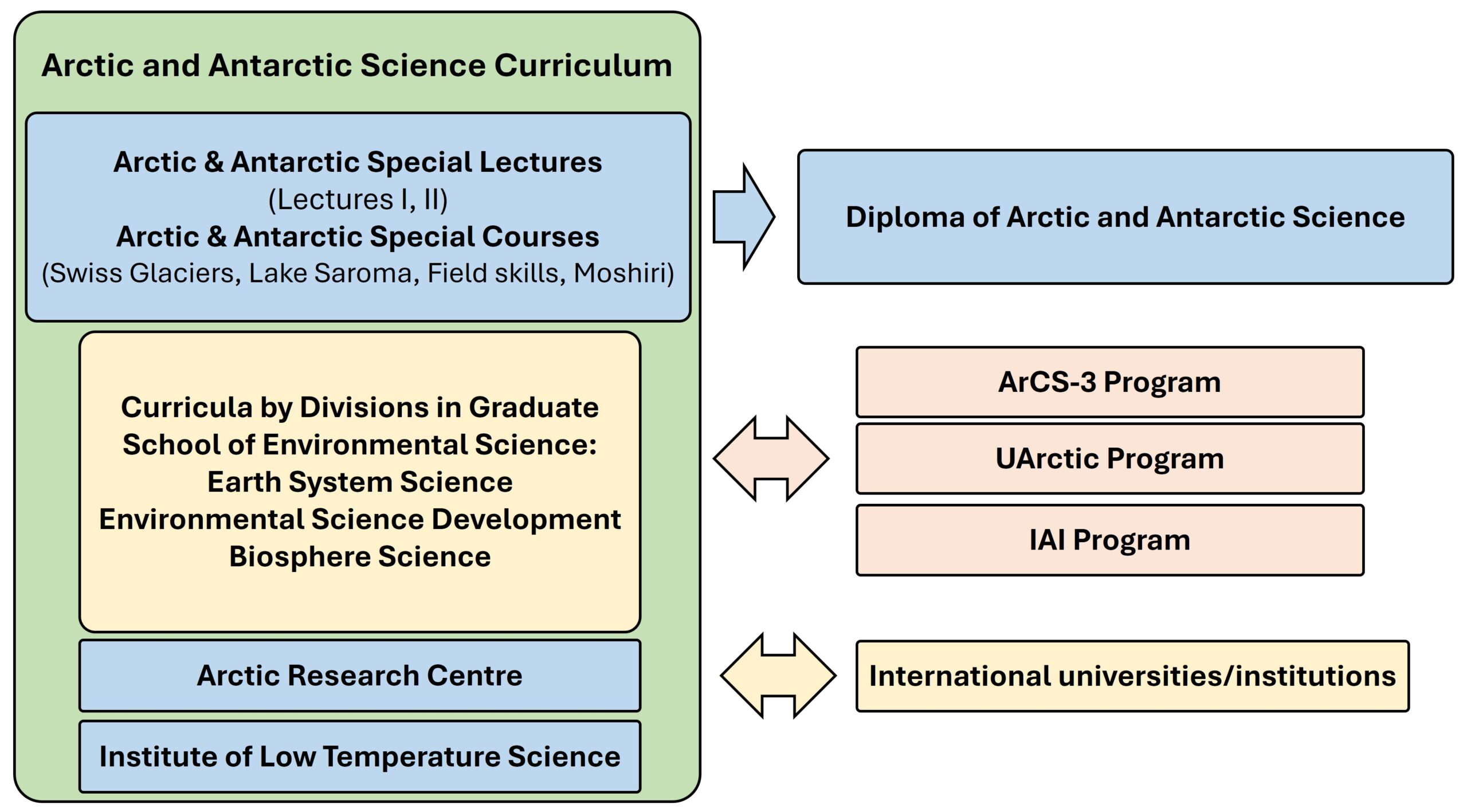
The Graduate School of Environmental Science at Hokkaido University, in collaboration with the Arctic Research Centre, the Institute of Low Temperature Science, the Graduate School of Fisheries Sciences, and other affiliated institutions, offers the Arctic and Antarctic Studies Curriculum. Building upon the International Antarctic Institute Curriculum, which was established in 2007, the program has expanded to encompass both polar regions through collaboration with ArCS III (Arctic Challenge for Sustainability III), Japan’s flagship Arctic research initiative.
This unique graduate-level program provides interdisciplinary education on the Arctic and Antarctic, covering snow and ice processes unique to the polar regions, global environmental change, the science of snow and ice, and human activities in polar environments. By combining Special Lectures on Antarctic Studies delivered by leading polar scientists from Japan and abroad, Special Field Training in Antarctic Studies conducted in Hokkaido and Switzerland, and specialised courses offered across the departments of the Graduate School of Environmental Science, the curriculum offers a comprehensive education in polar science that is unparalleled among graduate programs.
Arctic and Antarctic Science Curriculum
The Arctic and Antarctic Science Curriculum collaborates with a range of national and international organisations, including ArCS III (Arctic Challenge for Sustainability III), the International Antarctic Institute (IAI), and the University of the Arctic (UArctic). Through these partnerships, students have opportunities to participate in a variety of programs, such as international summer schools, student exchange activities, and other collaborative initiatives held around the world.
The curriculum is designed for all graduate students at Hokkaido University, from those with a general interest in the Arctic and Antarctic to those aspiring to pursue careers in polar research after completing their graduate studies. In addition, some of the program’s courses and activities are open to graduate students from universities in Japan and abroad, fostering an international learning environment.
Diploma of Arctic and Antarctic Science
Students who earn a certain amount of credits from the IAI curriculum will be awarded the Diploma of Antarctic Science from the Graduate School of Environmental Science, Hokkaido University. You can earn this certificate independently from master degrees from your own department. The diploma certifies that you acquired a broad range of knowledge and experiences on cryospheric and polar sciences.
Requirements
- Earn at least 14 credits
- 4 credits from the compulsory subjects (Special Lectures on Antarctic Science I and II) plus 10 credits in elective subjects.
- At least 2 credits of the elective subjects must be chosen from the field courses (Special Courses on Antarctic Science I, II, III, and Field Studies in Cryosphere).
List of Courses Offered
Special Lectures
- Special Lecture on Arctic & Antarctic Science I : Intensive Course・August
- Special Lecture on Arctic & Antarctic Science II : Intensive Course・October
Special Courses(Field Courses)
- Special Course on Arctic & Antarctic Science I(Glacier Field Course in the Swiss Alps): August-September
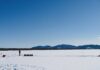
- Special Course on Arctic & Antarctic Science II(Sea Ice Field Course at Lake Saroma): February-March
- Special Course on Arctic & Antarctic Science III(Course for field skills): April-June
- Special Course on Arctic & Antarctic Science IV(Snow and ice course in Moshiri): January
Lectures in Graduate School of Environmental Science
- Fundamental Course in Cold Regions Sciences
- Fundamental Course in Paleoenvironmental Science
- Advanced Course in Glacier/Ice Sheet Science
- Advanced Course in Theoretical Glaciology
- Advanced Course in Meteorology and Climate in Cold Regions
- Advanced Course in Ocean Dynamics
- Advanced course in geoecological resources
- Advanced Course in Paleoceanography and Biomarker Geochemistry (Offered only in even-numbered academic years)
- Advanced Course in Biogeochemistry (Offered only in odd-numbered academic years)
- Advanced Course in Chemical Oceanography
- Advanced course in hydrological cycle
- Introduction to global environmental management
- Advanced course in climate change impacts
- Advanced course in frozen ground environments
- Advanced course in plant ecology/biodiversity science I
- Advanced course in environmental molecular biology I
*Course offerings may vary from year to year. Please refer to the official course listings and syllabi for the latest information.