Field Courses
Swiss Glacier Field Course(Special Course on Antarctic Science I)
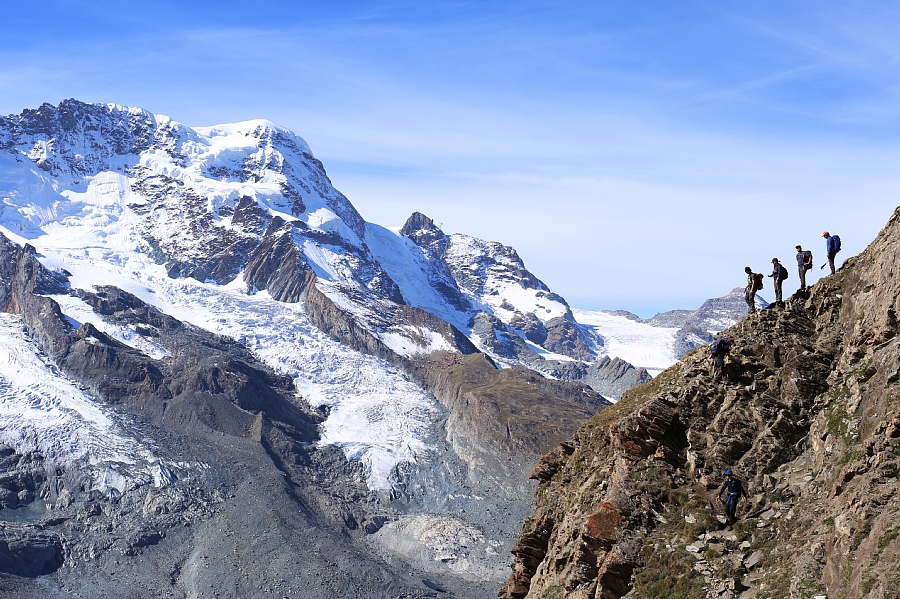 This field course is designed to deepen participants’ understanding of glaciers and glacial landforms through hands-on study in the Swiss Alps. In addition to conducting field observations directly on glaciers, participants will visit several representative Swiss glaciers to learn about a wide range of glacial processes.
Participants will analyse the field data collected during the course, and present and discuss their results, gaining first-hand experience of the entire process of field-based scientific research. The course also includes lectures on glaciology and climatology by researchers from the ETH Zurich, as well as visits to observation facilities to learn about cutting-edge research. Another major objective of the course is to promote interaction and exchange with local researchers and students.
For details, please refer to reports from previous field courses:
- Swiss Glacier Field Course 2006
- Swiss Glacier Field Course 2007
- Swiss Glacier Field Course 2008
- Swiss Glacier Field Course 2009
- Swiss Glacier Field Course 2010
- Swiss Glacier Field Course 2011
- Swiss Glacier Field Course 2012
- Swiss Glacier Field Course 2013
- Swiss Glacier Field Course 2014
- Swiss Glacier Field Course 2015
- Swiss Glacier Field Course 2016
- Swiss Glacier Field Course 2017
- Swiss Glacier Field Course 2018
- Swiss Glacier Field Course 2019
- Swiss Glacier Field Course 2022
- Swiss Glacier Field Course 2023
- Swiss Glacier Field Course 2024
Sea Ice Field Course at Lake Saroma(Special Course on Antarctic Science II)
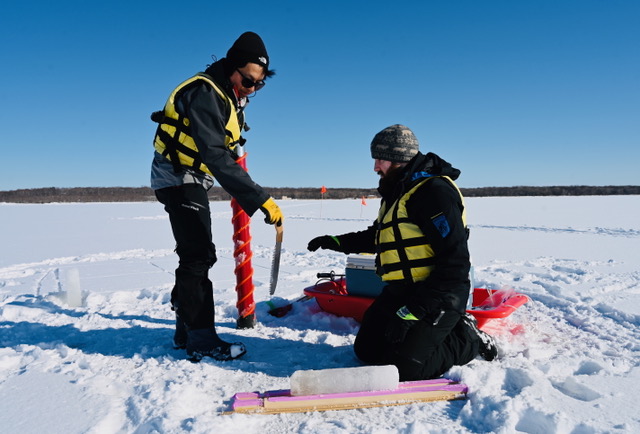 Sea Ice Field Course at Lake Saroma/Okhotsk Sea, conducted in collaboration with the University of Tasmania, focuses on sea ice observations at Saroma-ko Lagoon. Through fieldwork at the Lagoon and the Shiretoko Peninsula, participants gain hands-on experience in sea ice and oceanographic observations while developing a deeper understanding of the physical and biological characteristics of sea ice and its interactions with the ocean. (This course is offered biennially.)
For details, please refer to reports from previous field courses:
- Sea Ice Field Course at Lake Saroma/Okhotsk Sea 2006
- Sea Ice Field Course at Lake Saroma/Okhotsk Sea 2007
- Sea Ice Field Course at Lake Saroma/Okhotsk Sea 2009
- Sea Ice Field Course at Lake Saroma/Okhotsk Sea 2011
Course for field skills (Special Course on Antarctic Science III)
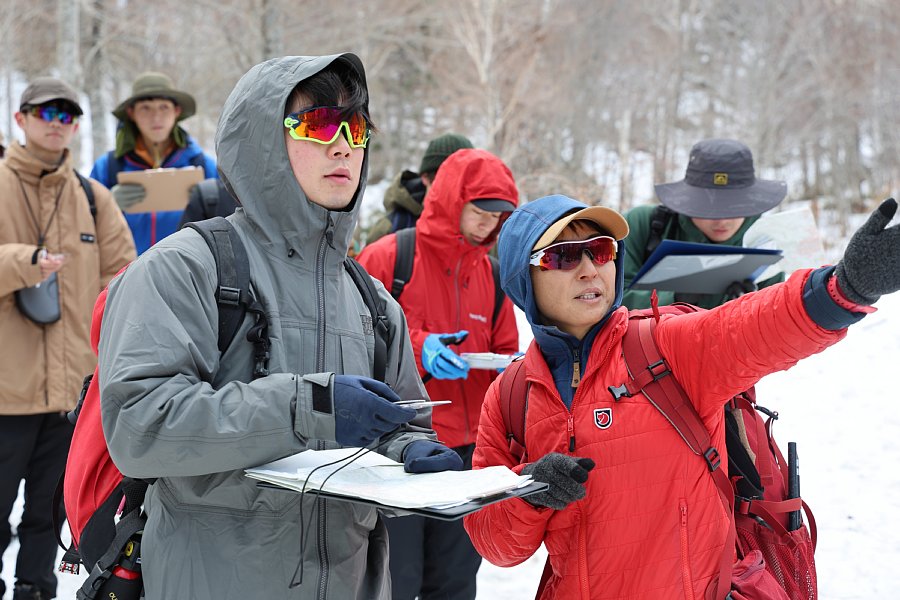 Field observations are essential to polar research, but conducting research in such harsh environments is challenging and can involve significant risks. This course provides practical training in skills and techniques required for fieldwork in polar environments, including glaciers, sea ice, and mountainous regions.
The course is led by Kazuo Higuchi of the National Institute of Polar Research, a field specialist with extensive expedition experience in the Himalayas and Antarctica. Participants learn practical knowledge and skills related to cold-region fieldwork, including appropriate equipment, avalanche and crevasse rescue, altitude sickness, hypothermia, and emergency response.
The program also features instructors from Hokkaido University. Combining classroom lectures, practical exercises, and an overnight field training session on Mt. Teine in Sapporo, the course offers a unique field safety program unlike any other in Japan.
For details, please refer to reports from previous field courses:
- Course for field skills 2007
- Course for field skills 2009
- Course for field skills 2010
- Course for field skills 2011
- Course for field skills 2013
- Course for field skills 2014
- Course for field skills 2015
- Course for field skills 2016
- Course for field skills 2017
- Course for field skills 2018
- Course for field skills 2020
- Course for field skills 2021
- Course for field skills 2022
- Course for field skills 2023
- Course for field skills 2024
Snow and ice course in Moshiri (Field studies in Cryosphere)
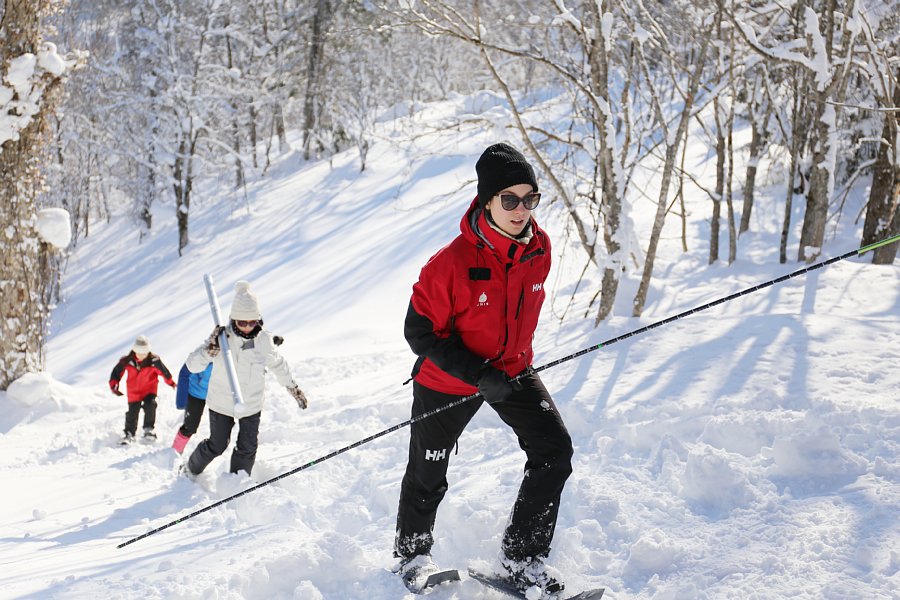 Located in Moshiri, Horokanai, Hokkaido, the Hokkaido University Uryu Experimental Forest is one of Japan’s coldest and snowiest regions. This field course is based at the Experimental Forest and provides training in observations of snow cover, the atmosphere and meteorology, and hydrology.
Participants will conduct field observations and data analysis during the peak of winter, investigating snowpack structure, atmospheric conditions, and river discharge. With snow depths approaching two metres and temperatures dropping below −20°C, the course offers a unique opportunity to experience the severe winter environment of northern Hokkaido while learning about the natural processes that characterise cold, snowy regions.
For details, please refer to reports from previous field courses:
- Snow and ice course in Moshiri 2007
- Snow and ice course in Moshiri 2009
- Snow and ice course in Moshiri 2012
- Snow and ice course in Moshiri 2013
- Snow and ice course in Moshiri 2014
- Snow and ice course in Moshiri 2019
- Snow and ice course in Moshiri 2020
- Snow and ice course in Moshiri 2022
- Snow and ice course in Moshiri 2024